
Journaling Techniques: Daily Bullet Gratitude Tips To Try
Lately, journaling techniques have exploded in popularity — not because it’s trendy, but because people are overwhelmed. Our minds are cluttered, emotions trapped, and attention scattered. And suddenly, something as simple as a pen on paper feels like a lifeline.
It’s not just a diary anymore. People are using daily journaling techniques to track moods, dump negative thoughts, spark creativity, even find meaning. Some lean on bullet journaling techniques to get structured. Others explore gratitude journaling techniques to try and heal their emotional wounds. And then there are journaling techniques and tips that help you build the habit when your brain just wants to scroll Instagram instead.
Here’s what makes journaling different: our minds think in images, thoughts, and words. Journaling brings all three together. That’s why it works. It’s not woo-woo — it’s how the brain makes sense of chaos. And for introverts especially, it’s a quiet outlet for things they’d never say out loud.
Gratitude Journaling Techniques To Try
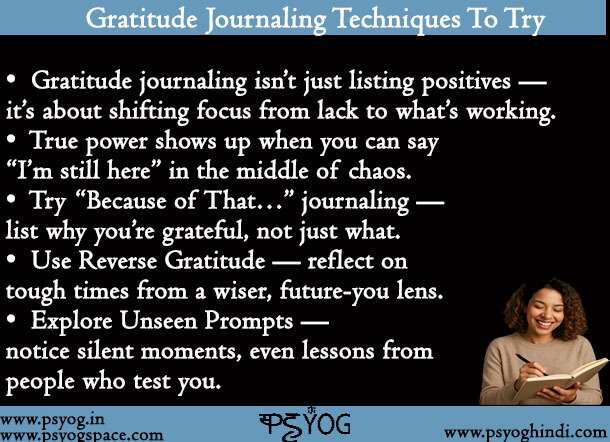
Gratitude journaling is more than listing “three things you’re thankful for.” Done with intention, it can reroute your brain’s focus away from what’s lacking toward what’s working — even in your hardest seasons.
It’s not always about joy. Sometimes, the most powerful form of gratitude is when things are falling apart, and you manage to whisper, “But I’m still here.” That’s the true magic behind gratitude journaling techniques to try.
Here are three unique ways to explore this deeply healing practice:
- “Because of That…” Journaling: Instead of just listing what you’re grateful for, add why.
Example:
“I’m grateful for my broken laptop — because of that, I finally took a break.”
This adds depth, rewires negativity, and helps you reframe daily stress.
- Reverse Gratitude: Write about a difficult experience — but from the perspective of future-you.
“I’m thankful I went through that heartbreak, because it taught me to choose peace over intensity.”
This technique blends mindfulness and emotional growth.
- Unseen Gratitude Prompts: Focus on things people often overlook:
- “A moment of silence today I’m grateful for…”
- “Someone who annoys me but has taught me something…”
This breaks surface-level patterns and forces mindful presence.
Each of these mindfulness gratitude journaling techniques to try pushes you into awareness, not autopilot. And when you start paying attention to little wins, big shifts follow. These mindfulness gratitude journaling techniques to try aren’t about being fake-positive — they’re about noticing what’s real.
Bullet Journaling Techniques
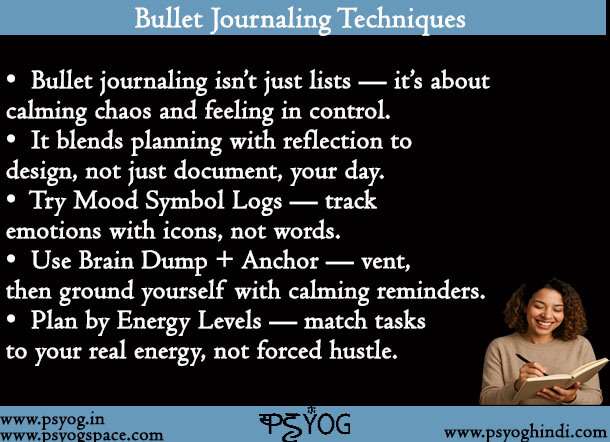
Bullet journaling sounds like it’s about bullets and lists — and sure, there’s a lot of that. But deep down, it’s about control. About calming chaos. You take all the scattered threads of your life and thread them through one dotted notebook. And suddenly your days stop slipping through the cracks.
Unlike traditional journaling, bullet journaling techniques merge planning with reflection. You don’t just document — you design your day. Here are three powerful and unique ways to do it:
- Mood Symbol Logs: Create small daily mood icons or symbols (smiley, cloud, fire, spiral).
Don’t use words — let the icon say it all. Over time, you’ll see emotional patterns emerge, especially tied to routines or environments.
- Brain Dump Pages with Boundaries: Set a space called “The Spiral” where you release every messy, cluttered, anxious thought. Then draw a bold line. Below that, write “The Anchor” — 2 calming, grounding reminders. It helps compartmentalize chaos.
- Energy-Level Planning: Next to your daily tasks, rate your energy from 1–5. Start planning future tasks based on those cycles. Instead of forcing productivity, you’ll work with your rhythms, not against them.
These bullet journaling techniques help you reconnect with yourself. It’s not about perfection — it’s a conversation with your nervous system. You track what matters, drop what doesn’t, and finally start listening to yourself in a world that’s always shouting.
Journaling Techniques And Tips
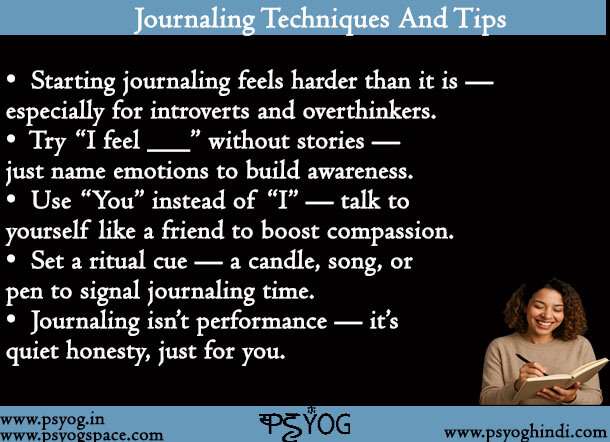
Let’s be honest: journaling isn’t hard, but starting feels impossible sometimes. Your mind resists. You blank out. You write one sentence and feel silly. That’s why you need real journaling techniques and tips, not cookie-cutter advice.
Here are three that actually work — especially for introverts and emotional overthinkers.
- Name the Emotion Without a Story: Open your journal and just write:
“I feel ___.”
Don’t explain it. Don’t justify it.
Just name it. Over and over if needed.
This trains emotional awareness without drama.
- Use “You” Instead of “I”: Write to yourself like you’re your own friend:
“You’re doing your best. You’re tired but still showing up.”
It creates self-compassion and removes ego-blocks.
- Create a ‘State Change’ Cue: Light a candle, play a song, use a specific pen — something that signals “now I journal.”
The mind learns through repetition. These small rituals become anchors over time.
Remember, the mind only understands words, thoughts, and images. Journaling is all three — that’s why it feels like relief. And if you’re someone who doesn’t talk much, especially an introvert, these journaling techniques and tips give you permission to release. No judgment. No audience. Just truth.
You don’t need to be a writer — you need to be honest.
Popular Read:
Daily Journaling Techniques
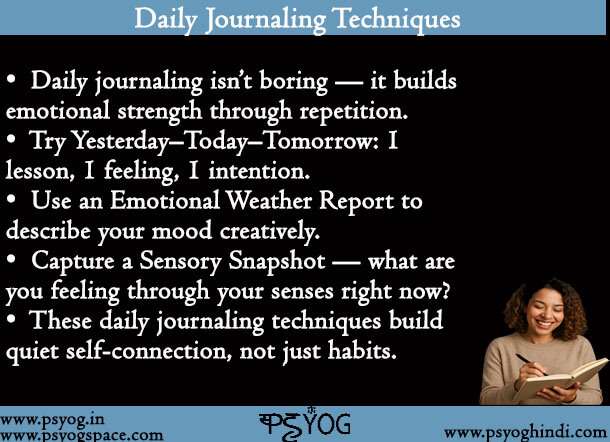
Doing something every day can feel boring. But with journaling, daily repetition doesn’t kill the magic — it strengthens it.
Daily journaling techniques don’t need to be long or beautiful. They need to be real. It’s about emotional hygiene. Just like brushing your teeth, you clean out what doesn’t belong in your brain.
Here are three powerful ways to build a daily practice:
- “Yesterday, Today, Tomorrow” Format
Yesterday: 1 lesson
Today: 1 emotion
Tomorrow: 1 intention
This is great for mornings or evenings — a quick check-in with your past, present, and future self.
- Emotional Weather Report
Each day, give your emotional state a weather term:
“Foggy with pressure”
“Sun trying to break through clouds”
Let your creativity express what words can’t.
- Sensory Snapshot
Close your eyes. What do you hear? Smell? Feel? Taste?
Write it down. This trains awareness, relieves anxiety, and grounds you in your body.
These daily journaling techniques aren’t about productivity — they’re about intimacy. With your own thoughts. With your own reality. When you stick with these daily journaling techniques, journaling becomes not just something you do, but who you are.
Conclusion
Journaling isn’t some miracle productivity hack — it’s ancient, personal, messy, and alive. Whether you’re experimenting with bullet journaling techniques, trying gratitude journaling techniques to try, or following grounded journaling techniques and tips, what matters most is showing up.
You don’t need fancy notebooks. You don’t need hours. You just need to be honest. To get quiet. To start where you are.
These journaling techniques, whether reflective or chaotic, structured or soulful, help you speak the language of your mind: words, thoughts, and images. And with consistency, they teach your brain something it’s been craving all along — presence.
Try one of these daily journaling techniques tonight. Not for perfection. But for connection.
Healthy You:
FAQs
What is the best method of journaling?
The best method of journaling is the one that feels sustainable and real for you. Some people thrive with bullet-style structure — others need free-flow, emotion-led writing. You might journal in the morning to set intentions, or at night to release stress. The key is to listen to your mind’s rhythm and emotional needs. Don’t overthink it. Start with something small — even one line a day — and let it grow naturally. The best method is one you’ll actually return to, not one that looks good on Instagram.
How do I do a gratitude journal?
Start simple. Every day, write down 3 things you’re grateful for — but go beyond the obvious. Think of people, smells, sounds, small victories, even things that challenged you. Want to deepen it? Add why you’re grateful for each one. Or try writing a note of appreciation to your younger self, or to your body. Gratitude journaling isn’t about faking happiness — it’s about noticing the good that’s already here. And in tough times, it becomes an anchor that reminds you: you’ve made it this far.