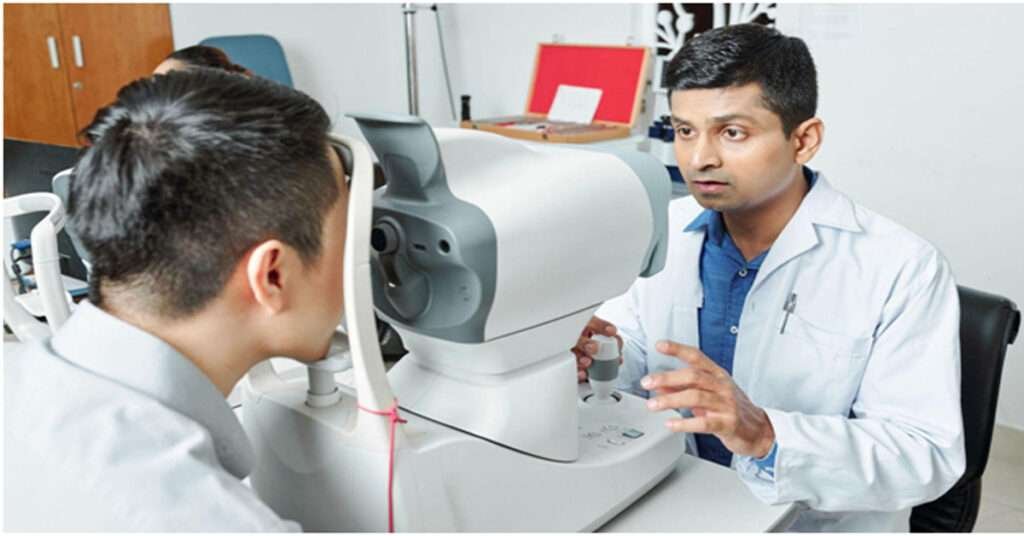
What Help Can an Ophthalmologist Provide in Dealing With Vision Issues Related to Diabetes?
Diabetic retinopathy usually does not begin with any definite symptom. It might happen that you find letters are just a little bit blurred or it takes time for your eyes to focus. Or it might be the case that you perceive everything depending on the time of day.
It is the ophthalmologist who will be able to figure out what is happening inside your eye, to identify the cause and prescribe further treatment.
What the Doctor Looks for First
Diabetes may impact on small blood vessels in the retina – light-receiving portion of the eye. Since diabetes-related changes may occur without symptoms, an eye exam becomes necessary regardless of how your vision seems at the moment.
When checking your eyes, the doctor will try to detect spots of bleeding, leakage, swelling and presence of diabetic retinopathy. During the eye examination, any change from the last visit may be revealed.
Blurry Vision Requires Correct Examination
Blurry vision may occur due to many factors. Fluctuations in your blood glucose levels may lead to temporary blurriness of the vision. Cataracts, swelling of the retina or other eye condition can also cause blurred vision.
An eye specialist may conduct an eye examination and diagnose the underlying cause. It is essential as treatment of temporary blurring and retinal changes differs from each other.
Tracking Diabetic Retinopathy in Time
Retinopathy due to diabetes might stay mild for some time, but the condition might worsen without showing any symptoms at all. The appointments allow the ophthalmologist to make comparisons between two exams.
If there is no change in the retina’s condition, follow-up exams would be sufficient. In case changes occur, the doctor might ask the patient to come back soon.
Checking the Centre of the Retina
Macula is located at the centre of the retina and functions in tasks such as reading, face recognition and detailed vision. Fluids could accumulate in this area for individuals suffering from diabetes.
This could lead to blurry, wavy or distorted central vision. The ophthalmologist will be able to check on the macula and recommend any tests which will provide a more detailed view.
When Treatment Is Needed
Many early diabetic eye changes do not need treatment straight away. Monitoring may be enough. If the condition starts threatening vision, the doctor can discuss what suits that particular case.
Treatment may involve injections into the eye, laser treatment or surgery in advanced situations. An eye surgeon is usually involved when a surgical procedure is required. The choice depends on what has changed inside the eye.
Certain Symptoms that Cannot Be Postponed
Checking up is important, but there are certain symptoms that should be addressed immediately. Floaters appearing for the first time, seeing light spots, spots of darkness, loss of vision or blurring of vision should not be ignored.
These symptoms have various reasons; therefore, one cannot assume that they are a consequence of diabetes and need an examination to understand the problem and possible measures.
Conclusion
The ophthalmologist may help to diagnose damage to the retina, to examine the cause of blurred vision and monitor the dynamics. It is necessary for people with diabetes to have eye care even without changes in vision.