How To Practice Buddhism: Buddhism For Daily Life On Your Own At Home
I don’t even know where to start with this. I keep searching how to practice Buddhism like it’s a formula, but the truth is, the more I try to follow rules, the more lost I feel. It’s not a technique. It’s something you dissolve into. And honestly? I didn’t even want to practice anything. I just wanted peace. That’s what brought me here.
Some mornings I wake up and just sit there on the floor. No cushion. No mudra. Just floor. And my body aches, and my brain is already panicking, and I want to scroll or fix or eat or escape. And that’s the moment. Right there. I just breathe and do nothing. Nothing at all. And that’s where I practice.
Not because I want to be a good Buddhist. But because it hurts too much not to.
I used to think Buddhism was a practice. But it’s not. It’s a way of being. And once that clicks, you start to notice it everywhere — the way you reach for your phone to escape yourself, the way you speak to people while planning what you’ll say next, the way your breath vanishes the second stress shows up. Buddhism is that noticing. And then staying.
I can’t even explain it without sounding like I’m lying. Or pretending to be enlightened. I’m not. I’m a mess. But something about sitting still with the mess makes me less reactive. Less cruel. Less… fake.
How To Practice Buddhism For Beginners
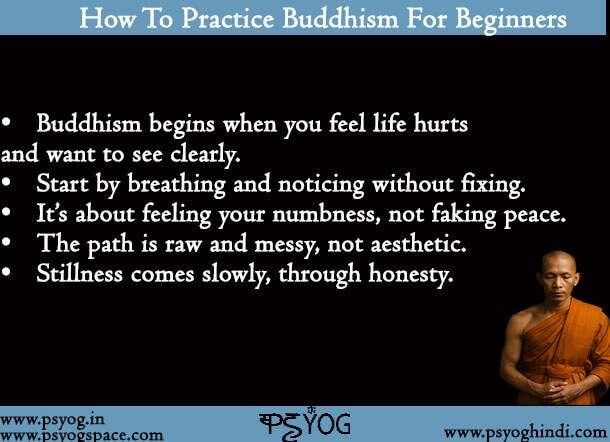
You don’t “start” Buddhism like it’s a gym membership. You sort of wake up one day and realize everything hurts more than it should. And that you’re contributing to it. That’s where the whole how to practice Buddhism for beginners thing gets complicated. Because nobody can teach you how to see. You have to get tired enough to look.
If you really want a beginning, try this: close your eyes and just breathe. Not to become peaceful. Just to see what happens. That’s it. One breath. Then another. Noticing the tension in your jaw. The way your shoulders guard your heart. That’s how to practice Buddhism for beginners — not by faking kindness, but by learning where you’re still numb.
And God, we’re all so numb.
You’ll want to skip this part. You’ll want to rush to the peace. But the peace comes after the unraveling. And that’s not cute. Or aesthetic. It’s painful. Ugly. Boring, even. But slowly, a new kind of stillness shows up. One that doesn’t need music or mantras. One that lets you be exactly who you are, even if you’re tired and scared and full of grief.
Also Read:
How To Practice Buddhism In Daily Life
Every time someone tells me to be mindful while brushing my teeth, I want to scream. Not because they’re wrong. But because it’s hard. My mind is chaos. My life is chaos. But I get it now. That’s the whole point.
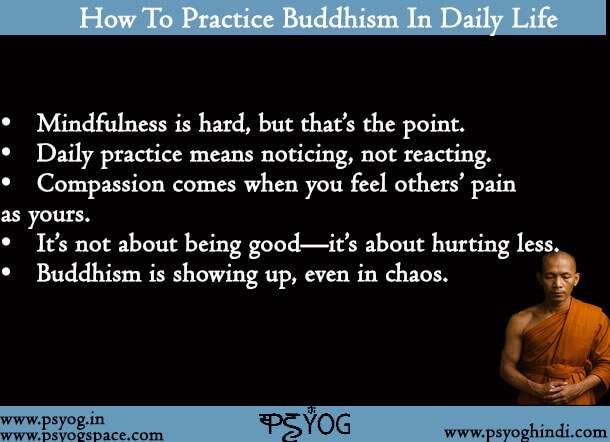
Learning how to practice Buddhism in daily life is learning how to stop abandoning yourself a thousand times a day. It’s noticing when you’re angry. And then not feeding it. It’s hearing your partner say something sharp and choosing not to retaliate. Not because you’re a doormat — but because you see their pain too.
There’s this moment — if you breathe long enough — where the walls between you and everyone else just kind of… collapse. And it’s like, holy shit. That person’s suffering is mine too. That’s when compassion stops being an effort. It just happens. You feel it. You feel them.
That’s the quiet secret behind how to practice Buddhism in daily life. It’s not about rituals. It’s about realizing the pain you cause to others always comes back. So you stop. Not because it’s good. Because it hurts less.
How To Practice Buddhism On Your Own
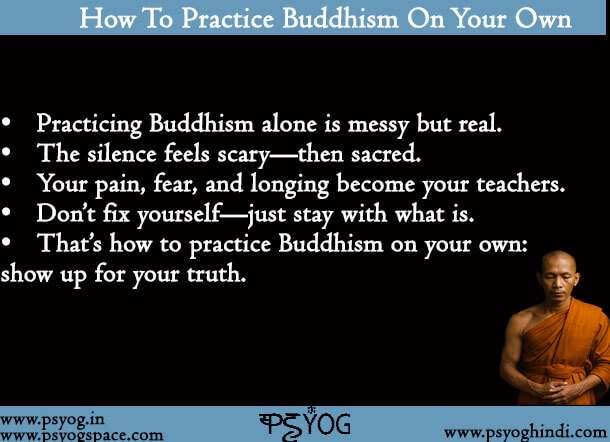
This might be the only way I’ve ever done it — on my own. No monks. No sangha. Just me and some YouTube videos and late nights where I cried into old notebooks. If you’re wondering how to practice Buddhism on your own, just know this: the silence will scare you at first. But then it becomes home.
I used to sit in bed and repeat “I don’t know” as a mantra. Over and over. I don’t know what I’m doing. I don’t know if I’m real. I don’t know how to love. I don’t know if I’ll be okay. And somehow, that honesty was sacred. That was my temple.
We think we need teachers. But the pain is the teacher. The fear. The recurring jealousy. The endless desire to be seen, validated, loved. That’s the teacher.
You can practice Buddhism on your own by sitting with that without running away. Let the hunger speak. Let the ego yell. Don’t fix it. Just stay.
That’s how to practice Buddhism on your own. You sit down with your madness and bow to it.
More Like This:
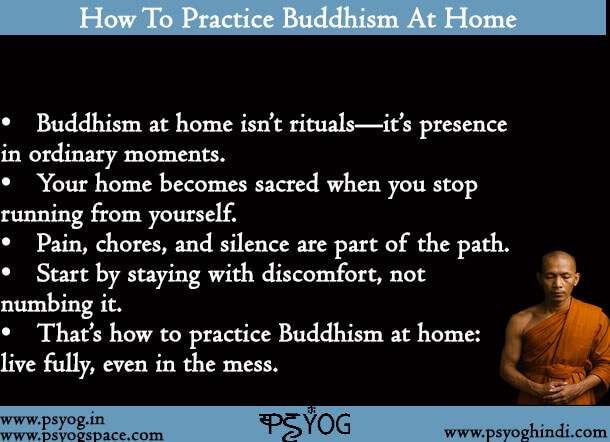
How To Practice Buddhism At Home
People think Buddhism at home means burning incense and buying a statue. No. It’s washing dishes with presence. It’s realizing that screaming at your mom isn’t a small thing. It creates ripples in your nervous system. And hers. It’s sacred, this space we live in.
I didn’t have a “practice space.” My altar was a dusty window ledge. My mat was the floor. My meditation was weeping in the kitchen and choosing not to numb it with sugar or scrolling. That was the work.
If you ask how to practice Buddhism at home, I’ll tell you: start by not escaping yourself when the fridge is humming and your thoughts are loud and you want to check your phone. That’s the moment. Stay.
When I was at my worst, I’d fold laundry like it was prayer. One shirt, one breath, one apology to the person I used to be.
That’s how to practice Buddhism at home. Not by escaping life. But by entering it. All the way.
Conclusion
So, let me not wrap this up neatly. Buddhism isn’t neat. It’s not linear. You don’t “get it.” You don’t arrive.
You just keep coming back.
Whether you’re learning *how to practice Buddhism for beginners*, or fumbling through *how to practice Buddhism in daily life*, or wondering if you’re even allowed to do this *on your own*, or trying to build something sacred *at home* with your mess and your grief — the only real instruction is this:
Don’t leave yourself.
Don’t numb out.
Return.
That’s how to practice Buddhism.
FAQs
Can I practice Buddhism on my own?
Yes. Honestly, many do. You don’t need permission. Buddhism isn’t about joining a club — it’s about waking up. Sit with yourself. Cry if you have to. Let silence teach you. That’s enough. That’s more than enough.
How do I start life as a Buddhist?
You don’t declare it. You live it. You stop lying to yourself. You feel everything. You bow to reality — not your ideas about it. That’s where it begins. Everything after that is just breath and return.
How to start practicing Buddhism at home?
Don’t wait for the perfect setup. Sit wherever you are. Wash the dishes with your whole attention. Listen to your family. Watch your thoughts. Practice in your socks, your mess, your real life. That’s the temple.